Why Websites Without a Post-Contact Roadmap Lose Leads: And How to Build One
Struggling with low website conversions? Learn how a Post-Contact Roadmap reduces hesitation, clarifies next step, and helps generate better enquiries.
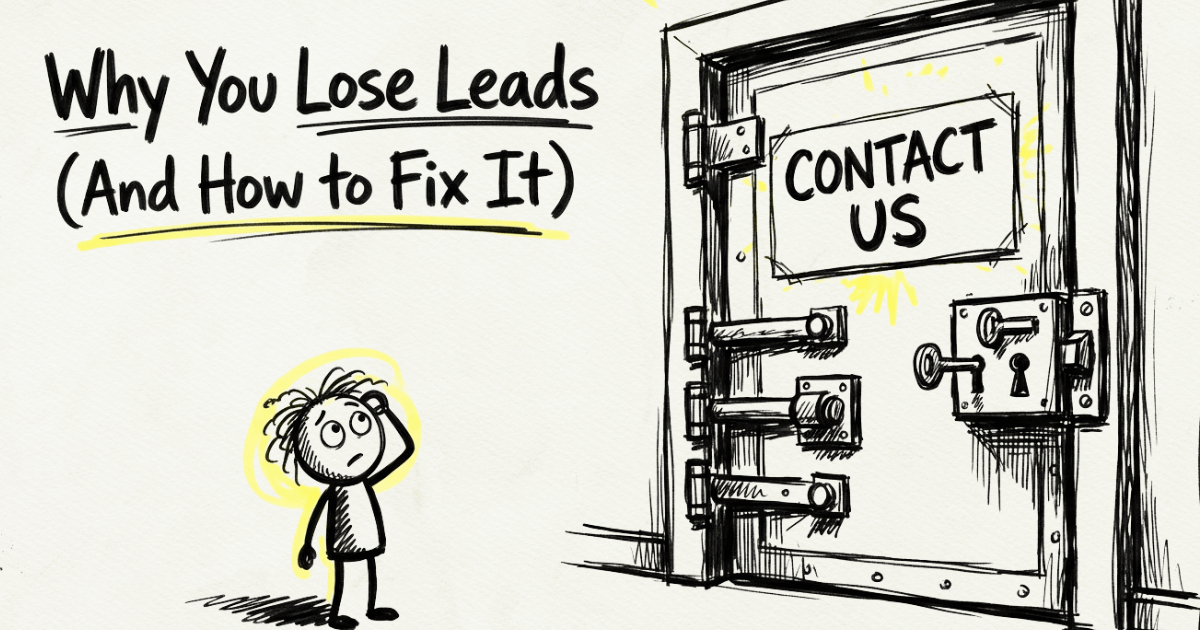
Ever notice how strange this feels?
You open Google Analytics. You see people visiting your website. Pages are loading. Traffic is here.
And yet … you don’t get enquiries.
You’ve tweaked the call-to-action. Changed the button color. Adjusted the font size. Moved it higher on the page.
But still didn’t move the needle.
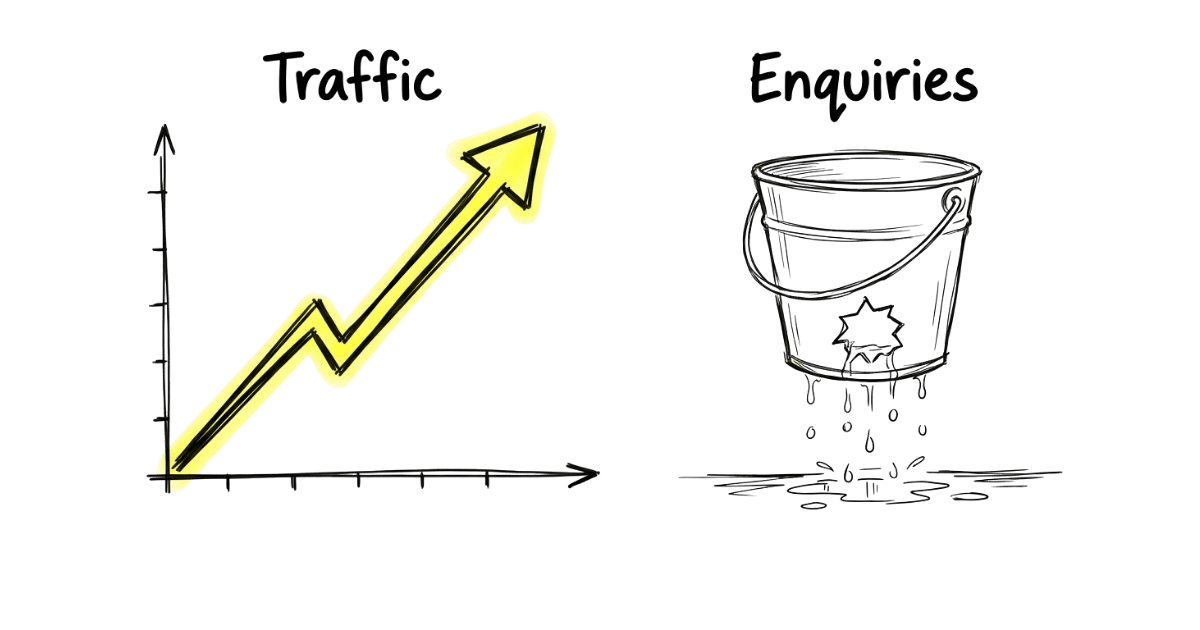
At this point, most business owners assume one of two things:
Either
- “These visitors aren’t serious”, or
- “My website just isn’t good at converting”
Sometimes, that’s true.
But often, something else is happening.
Some visitors do want to reach out. They’re not browsing casually. They’re not comparing ten options.
They pause. Not because they’re uninterested. But because they’re unsure.
Unsure about what happens after they click.
Will someone call them immediately?
Will they be pressured into a sale?
Is this a quick chat or a long commitment?
Are they about to waste everyone’s time?
So they do what people do when the outcome is unclear.
They wait.
Or they leave.
And that hesitation, that quick moment of uncertainty, is where many good enquiries disappear.
Not because your CTA button isn’t bright enough.
But because you asked them to step forward without showing them where they will land.
There is a straightforward way to remove this hesitation. It doesn’t involve redesigning your site. And it doesn’t require persuasion tricks.
But before we talk about how to fix it, there’s something important to understand. Because this hesitation isn’t really a design problem. It’s a decision problem.
A CTA is not just a Button. It’s a Commitment Decision
Most businesses think of a call-to-action as a design element.
A button.
A color.
A line of copy.
But from your visitor’s point of view, clicking “Contact Us” is not a design interaction.
Instead, it’s a commitment decision. It’s the moment they move from anonymous observer to identifiable participant.
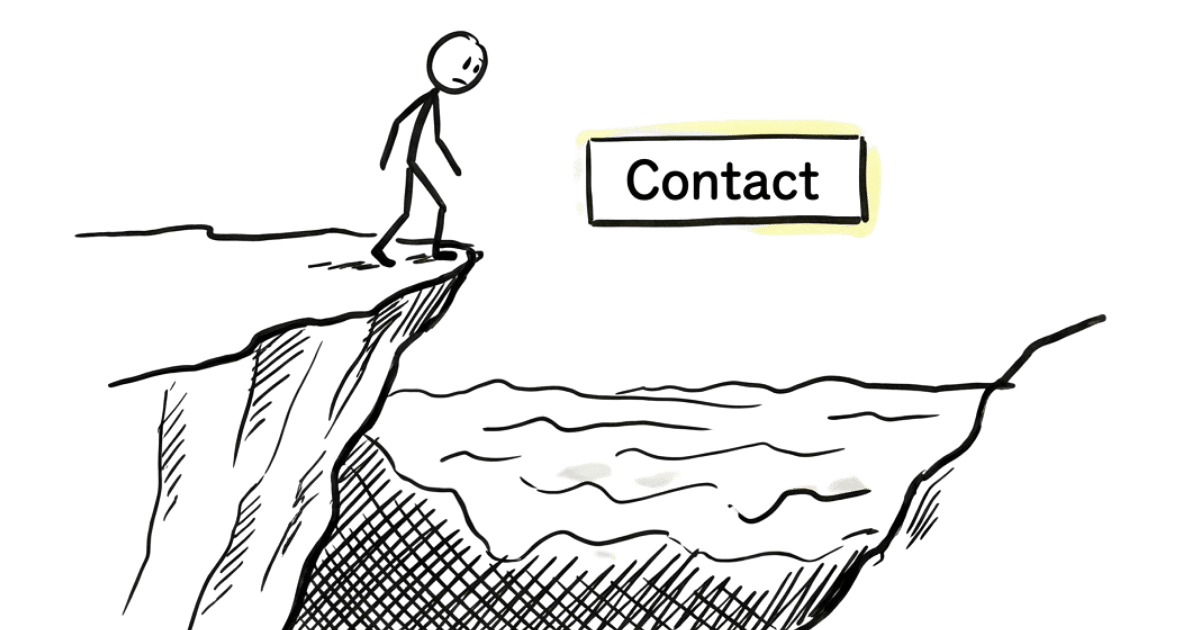
They’re no longer just browsing.
They’re stepping into a conversation.
That shift carries risk.
Risk of pressure.
Risk of awkwardness.
Risk of wasted time.
When a website ignores that moment, and treats the CTA like a cosmetic element, visitors are left to imagine the worst.
What most websites lack is not a better button.
They lack a visible Post-Contact Roadmap.
Why visitors hesitate before contacting you?
Let’s slow this down for a moment.
Why does this hesitation happen so consistently?
Why do people pause at the exact moment they’re about to reach out?
It’s not because they suddenly lose interest. It’s because humans are uncomfortable with unclear outcomes.
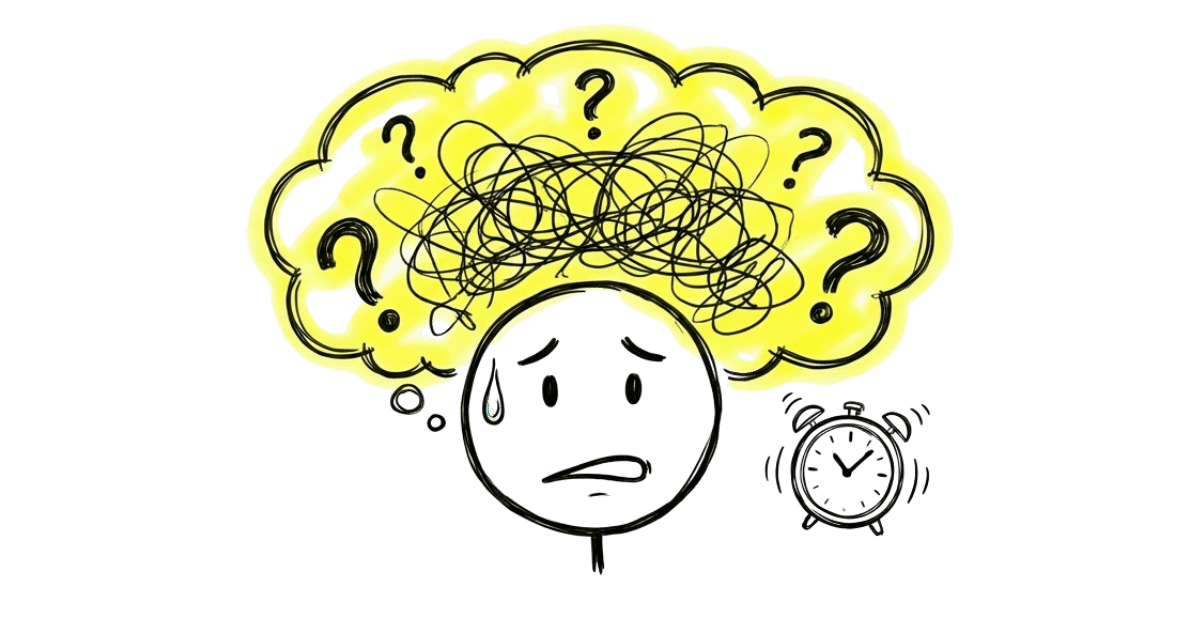
In behavioural economics, there is a well-known concept called ambiguity aversion.
In 1961, economist Daniel Ellsberg published research showing that people prefer known risks over unknown ones.
In simple terms, we’re more comfortable dealing with something predictable, even if it’s inconvenient, than something vague.
Think about this.
If someone messages you and says: “Can we talk tomorrow? I’ll explain then.”
No context.
No agenda.
No hint of what it’s about.
Most people feel slightly uneasy.
Not because talking is difficult. But because they don’t know what they’re walking into.
Is it good news? Bad news? Complaint? Or sales pitch?
That small uncertainty creates tension.
Now imagine the same message says: “Can we talk tomorrow about your website? Just a quick 15-minute check-in.”
Same meeting. Very different feeling.
Clicking “Contact Us” on a website works the same way.
From your point of view, it’s just a form.
But from your visitor’s point of view, it’s stepping into an unknown situation.
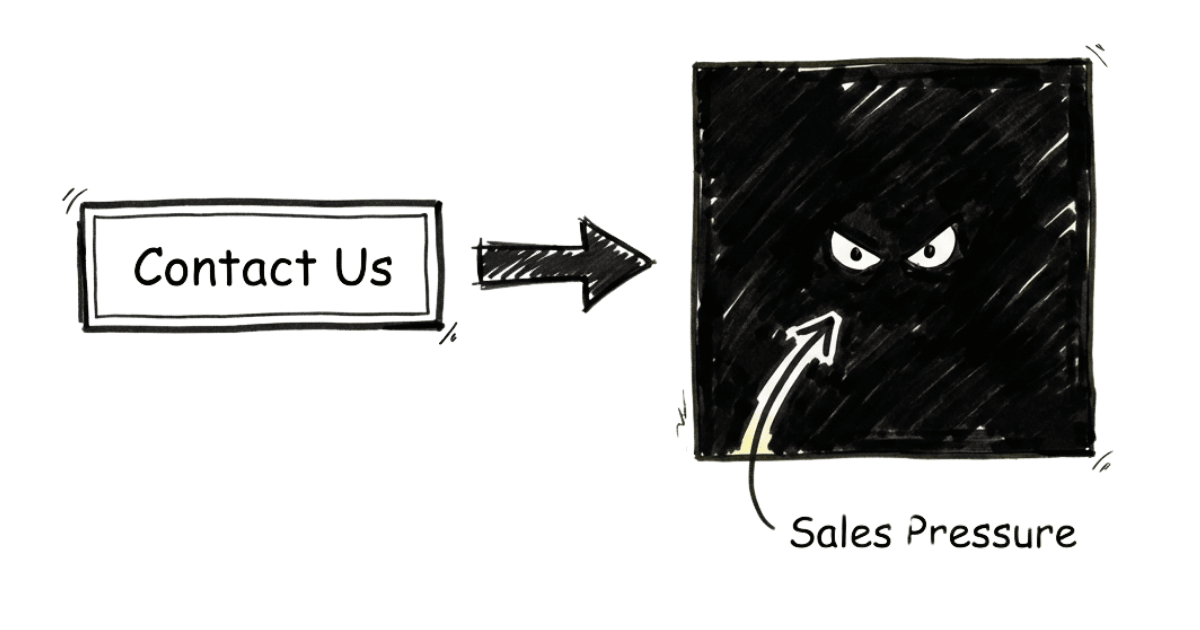
Will they get a call immediately?
Will they be pressured?
Will it turn into a long sales process?
Will they feel awkard saying no?
When the outcome is unclear, the brain chooses the safest option:
Do nothing.
Not because your offer is weak. But because the next step feels ambiguous.
When you remove that ambiguity and explain what will happen next, the perceived risk drops.
And when perceived risk drops, action becomes easier.
What a Post-Contact Roadmap Actually Does
A Post-Contact Roadmap is not about making your button more attractive.
It does something much simpler. It removes imagination.
Right now, when someone considers contacting you, they have to imagine what will happen next. And when people imagine unknown outcomes, they often imagine the worst.
A Post-Contact Roadmap replaces this imagination with clarity.
Instead of leaving visitors to guess, it tells them:
- What will happen first
- How long it takes
- And when real commitment begins
That’s it.
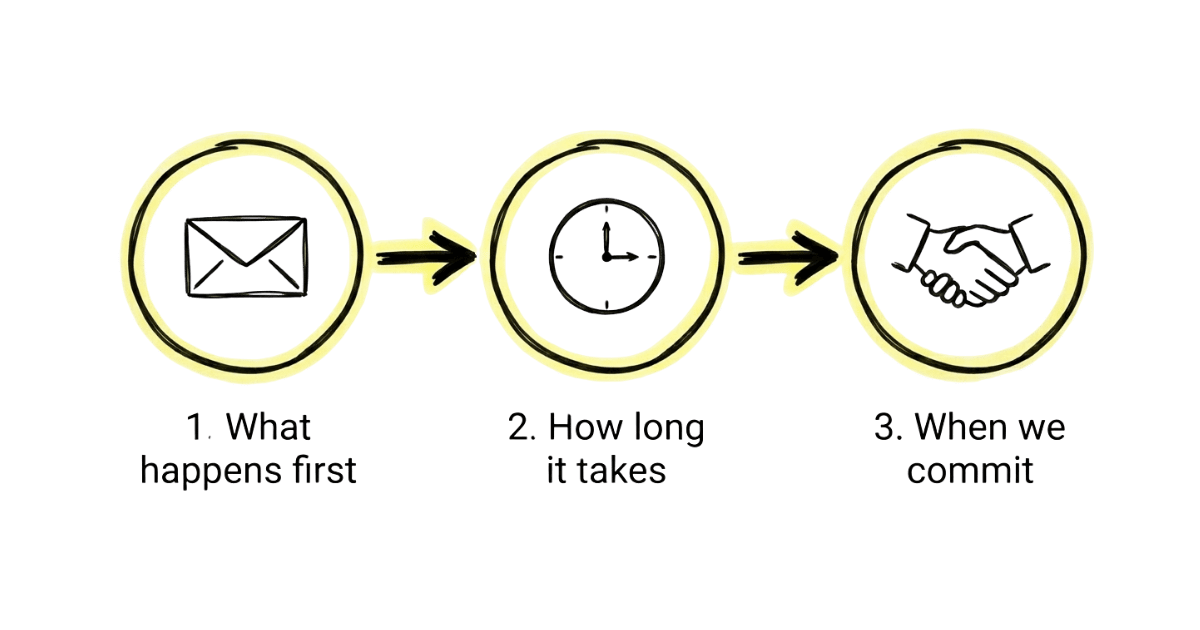
Think of it this way.
Your sales process already exists. You already:
- reply within a certain time
- have a first conversation
- decide whether there is a fit
- then move forward
But most websites hide that process.
When your customers can see the path, the step feels smaller and easier.
And that distinction matters.
How to Build a Post-Contact Roadmap
This is not a redesign exercise.
You don’t need new tools. You don’t need new copywriting frameworks.
You just need to show something that’s already exist.
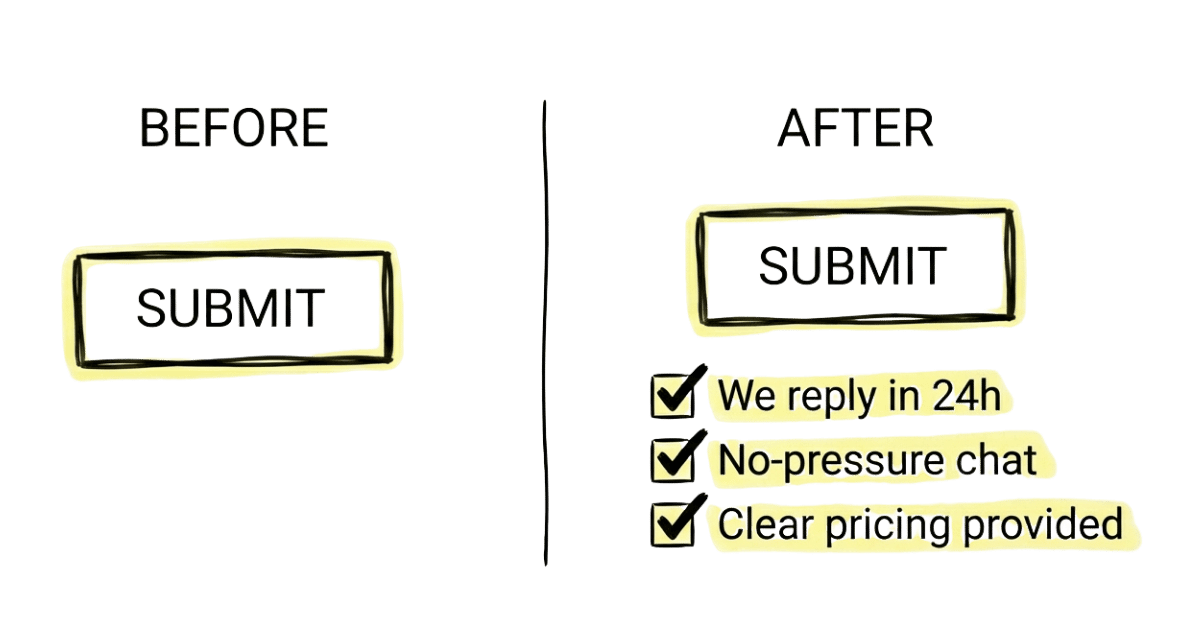
Start with this question:
When someone contacts you today, what actually happens?
Not the ideal version.
The real version.
Do you reply within a few hours? Do you send a WhatsApp message? Do you schedule a short call? Do you first do your research before giving a quote?
Write down your actual process.
Now reduce it to three simple steps.
Not because three is magical. But because people understand short sequences better than long explanations.
Remember, a complete Post-Contact Roadmap answers three questions:
- What happens first
- How long it takes
- When commitment begins
For example:
Typical service company - 3 steps
- 1Initial contactWe’ll contact you within 24 hours to arrange a short call to understand your situation.
- 2ProposalIf there’s a fit, we’ll schedule a deeper discussion and outline a proposal.
- 3DeliveryOnce you’re comfortable with the scope and pricing, we begin delivery.
Or:
Company with site visit - 3 steps
- 1Confirm availabilityWe’ll message you within 1 working day to confirm your availability.
- 2Site visit & pricingWe conduct a no-obligation site visit to understand your requirements and provide clear pricing.
- 3Schedule workIf you decide to proceed, we schedule the work.
That’s it. Notice how the timeline is visible. When people know how long they have to wait for a reply, they feel less tension after clicking.
Now place those steps where the decision happens.
Near your contact form. Near your WhatsApp button. Near your “Book a Call” section.
Not buried on another page.
And don’t just show what will happen.
Also clarify what will NOT happen.

For example:
- No obligation to proceed
- No hard selling
- No spam calls
This reduces imagined risk immediately.
Finally, be clear about when real commitment begins.
When will pricing be discussed? When will time commitment be clear? At which step does the visitor need to make a decision?
When those expectations are visible, the act of reaching out feels predictable.
You haven’t changed your process. You’ve simply made the path visible. You’ve made it easy for your visitors to make decisions.
Examples of Post-Contact Roadmap in Practice
Now that you know what a Post-Contact Roadmap does, let’s look at how some companies apply this in practice.
The key is not the design. It’s the predictability.
Basecamp
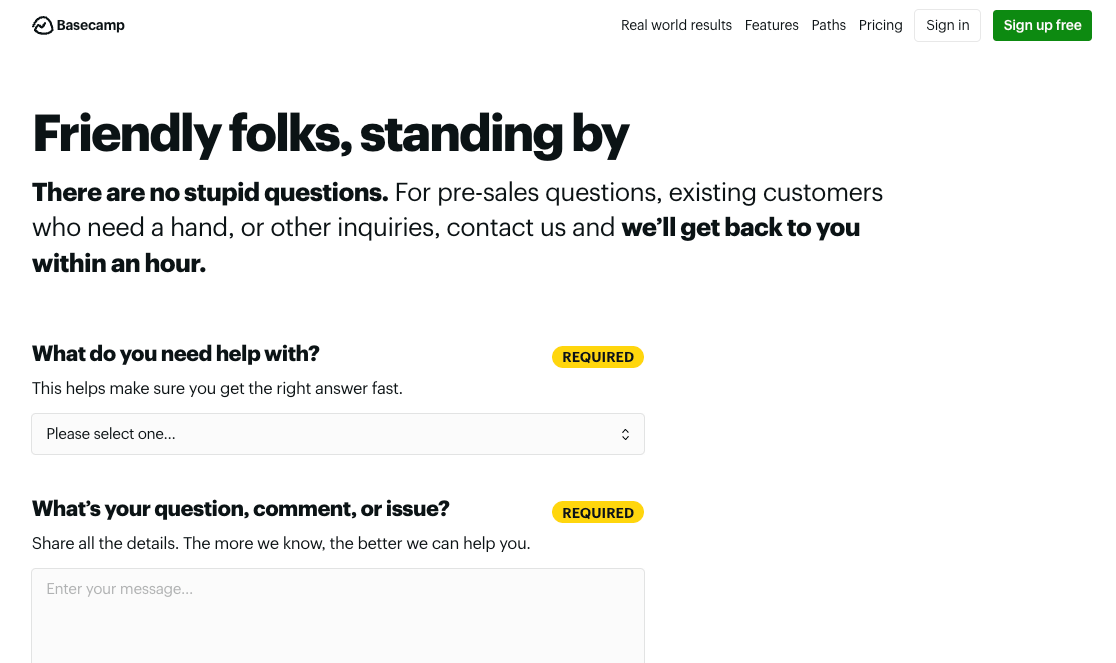
On Basecamp’s support page, they don’t just show a form. They make two things very clear:
- They respond within a short, specific timeframe
- There are no “stupid questions”
That second line might seem small. But it removes social risk.
People often hesitate to contact support because they don’t want to feel silly. By saying that questions are welcome, Basecamp reduces that hesitation. By stating response time, they reduce waiting anxiety.
Impact
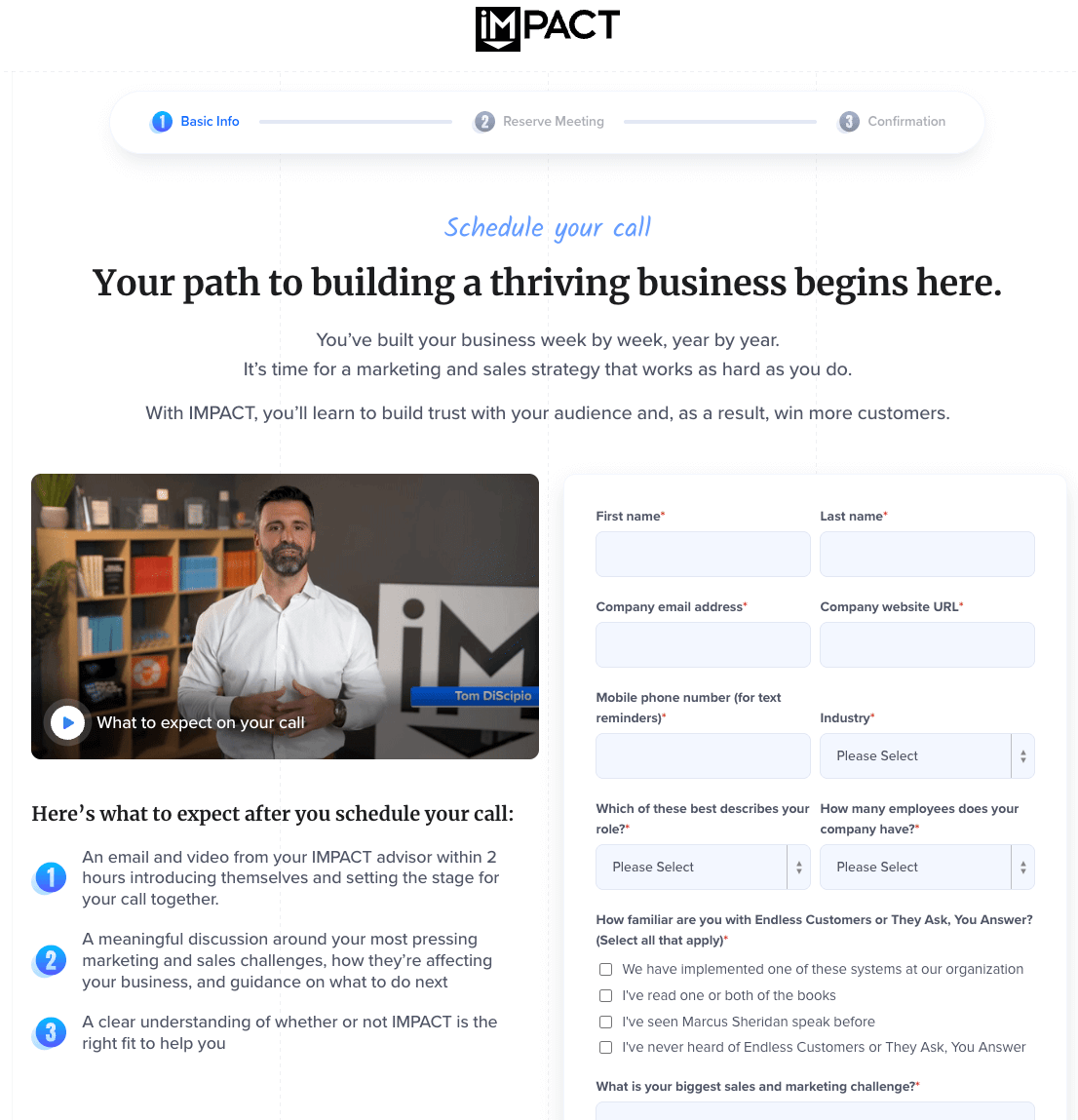
Impact doesn’t just ask you to “Book a Call”. They explain what the call is for.
You’ll understand whether there is fit. You’ll clarify goals. You’ll discuss next steps.
This does something important. It frames the first interaction as exploratory, not transactional.
Visitors now understand that they are not committing to a contract, and they are entering into a conversation.
River Pools
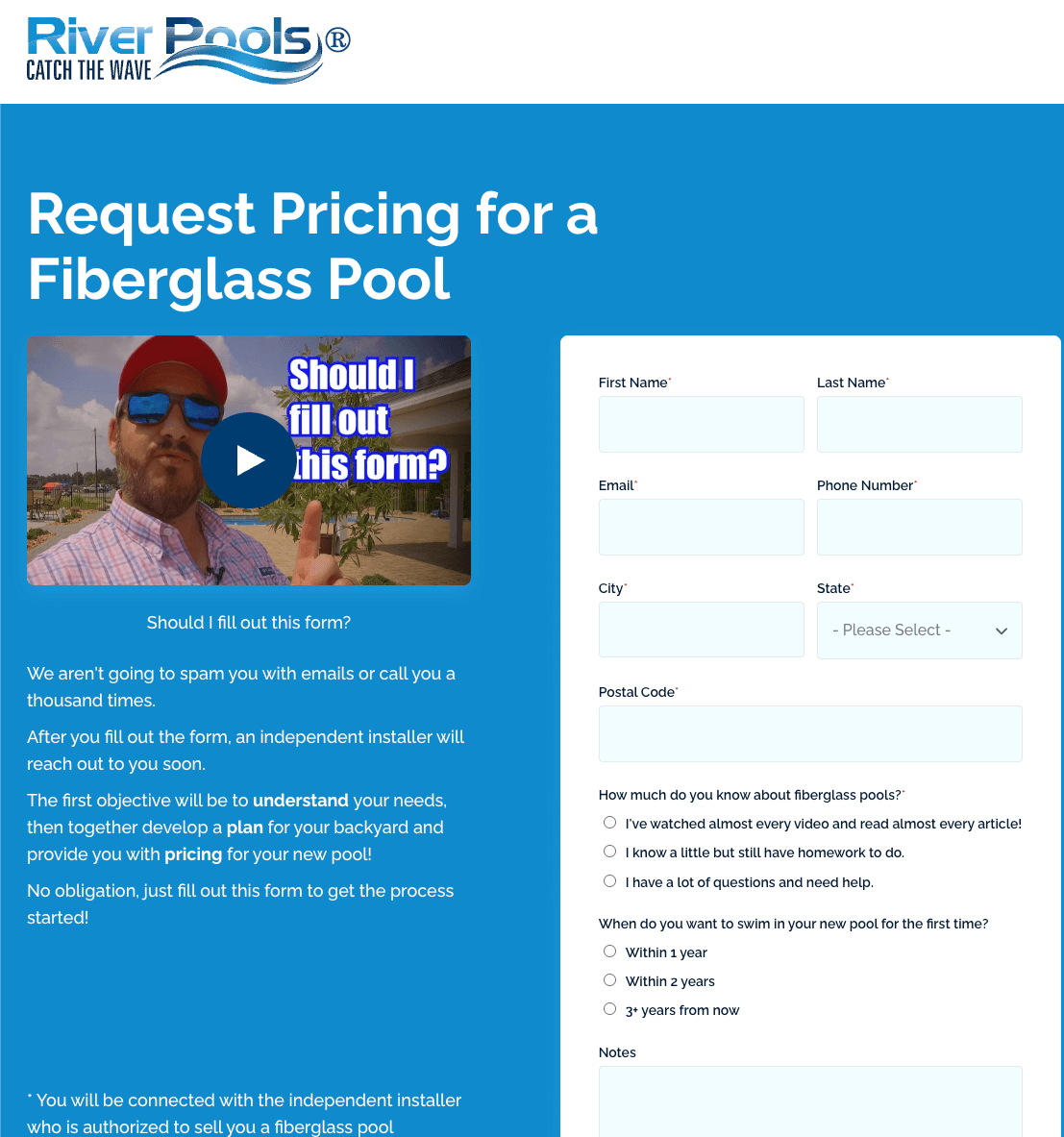
River Pools takes a slightly different approach. They openly address common fears such as:
- what happens after you fill out the form
- That you won’t be spammed
- That there’s no obligation
They also use video to explain whether you should fill out the form at all.
That might seem counterintuitive. But it actually increases trust.
When a business acknowledges hesitation instead of ignoring it, the visitor feels understood.
The Patterns Behind All These Examples
Different industries. Different services. Same principle.
They all
- show the shape of the journey
- Clarify response timing
- Reduce preceived pressure
- Make commitment stages visible
None of them rely purely on button color, urgency tricks or clever copy. They just reduce ambiguity.
Common mistakes when implementing a Post-Contact Roadmap
You now know what’s Post-Contact Roadmap is like. Let’s look at what’s the common mistakes when you are implementing it.
Making it sound like a sales funnel
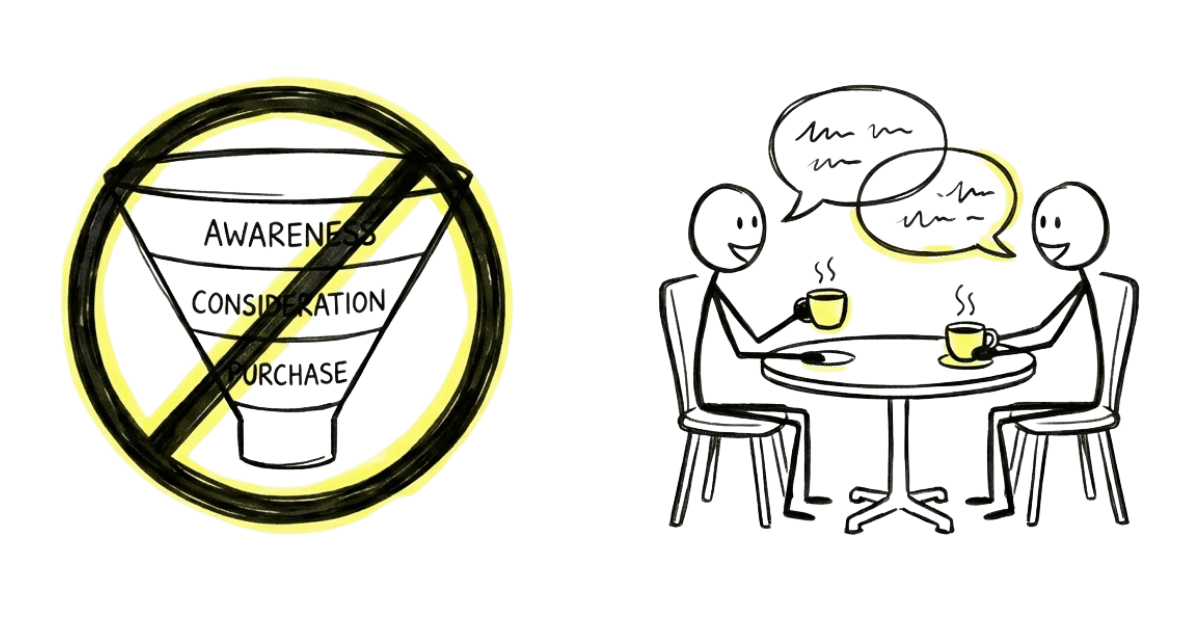
A Post-Contact Roadmap is not a marketing script. It’s not:
“Discovery Call -> Strategy Session -> Close”
If it sounds like a funnel, visitors will sense it.
Use plain language. Describe what actually happens.
If your first step is a short call, say that. If it’s a WhatsApp message, say that.
Professional clarity builds trust. Marketing language builds suspicion.
Being Vague About Timing
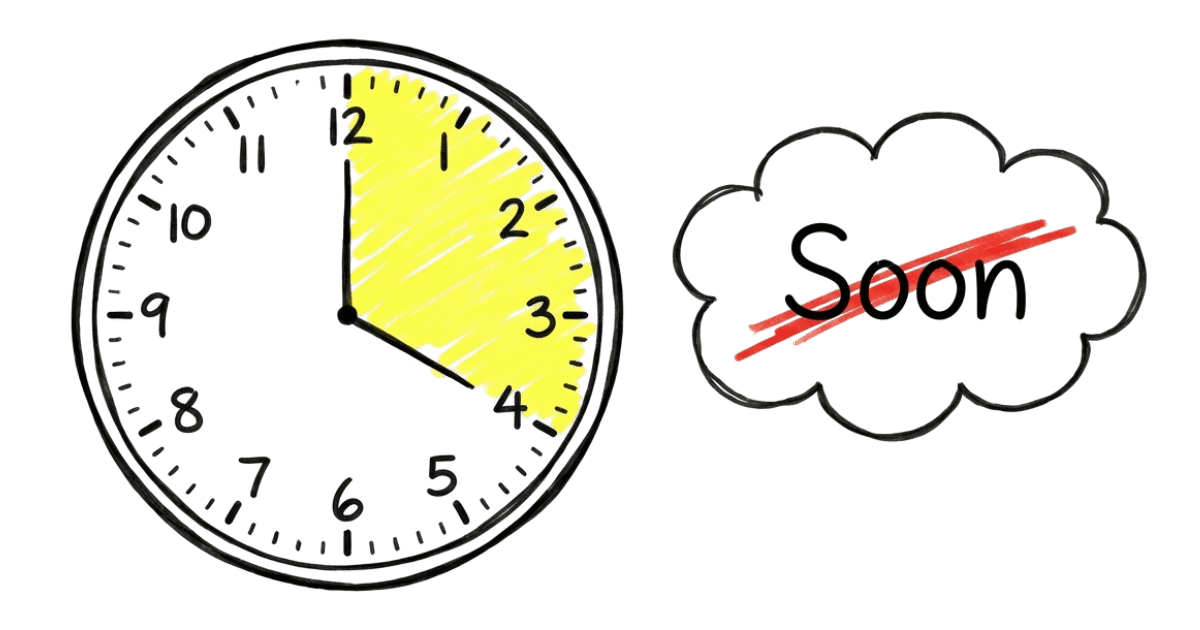
This is one of the most common oversights. Saying: “We’ll get back to you soon.”
Soon means different things to different people.
Is that 10 minutes?
One day?
Or a week?
Unclear timing creates tension after submission. If you can reply within 24 hours, say so. If you reply within one working day, say so.
Hiding when pricing or commitment happens
Many businesses avoid mentioning pricing steps because they’re afraid it will scare people away.
But hiding commitment doesn’t increase trust. It increases suspicion.
Be clear about when:
- Pricing will be discussed
- A formal proposal is given
- A decision is required
Clarity filters the wrong people and reassures the right ones.
Overcomplicating the Process
Some businesses try to explain everything.
Seven steps. Multiple branches. Detailed internal workflows.
Remember, this is not documentation.
It’s orientation.
Keep it simple.
Three clear stages are enough for visitors to understand the shape of the journey. You’re showing the path, not every turn.
Promising Unrealistic Speed
“Instant response” “Reply in 5 minutes” “Guaranteed same-hour callback”
Unless this is truly operationally consistent, don’t promise it. Unrealistic speed promises create stress internally and disappointment externally.
Professional businesses prioritise reliability over impressiveness.
What Happens Next?
At this point, this idea might feel almost too simple.
You’re just simply making your existing path visible.
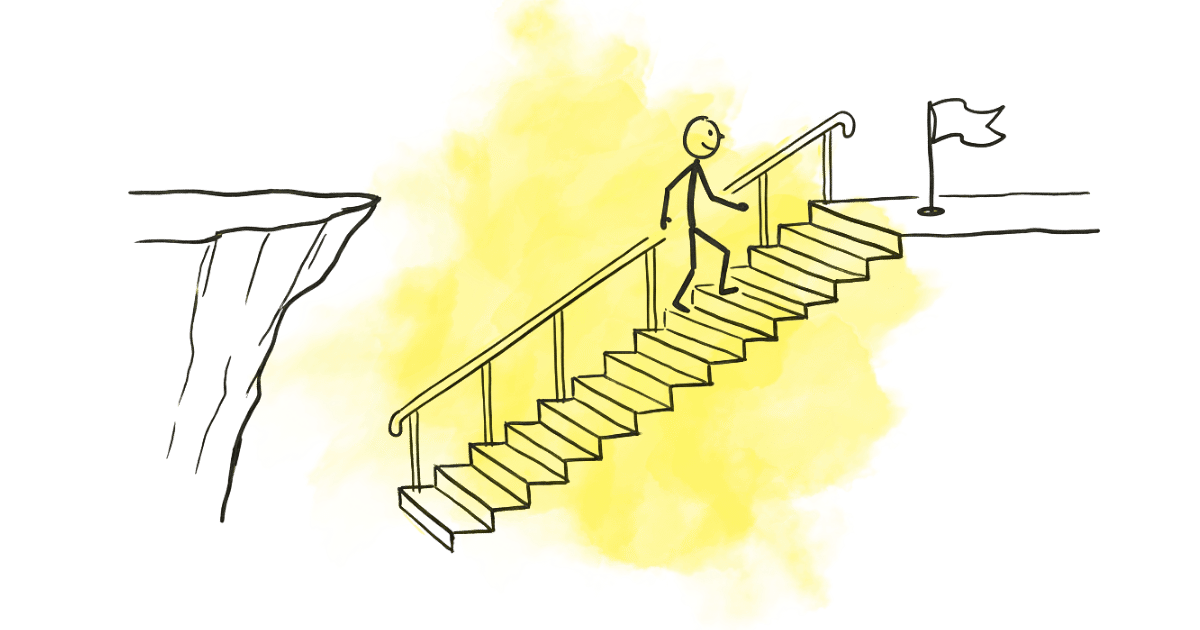
But simple does not mean insignificant.
So take a look at your website today.
When someone sees your “Contact Us” button, ask yourself:
- Do I clearly explain what happens after they reach out?
- Have I made the first step feel predictable?
- Is the point of real commitment visible?
- Or am I assuming we’ll explain it later?
That moment - right before they click - is where the decision is made.
This is the kind of friction I look for when auditing websites.
If you’re not sure what your website is silently causing visitors to worry about, that’s exactly what we diagnose.
Book your free assess-fit short conversation
with us to find out more.
Not how attractive the button is. Not how clear the headline sounds.
But whether the next step feels safe.
And if your website doesn’t make that visible yet, that’s not a failure.
It’s simply an opportunity to remove one more invisible barrier.
Frequently Asked Questions
What is a Post-Contact Roadmap in website design?
A Post-Contact Roadmap is a visible explanation of what happens after someone submits a contact form or books a call. It reduces hesitation by clarifying response time, process, and commitment stages.
Why do visitors hesitate before clicking “Contact Us”?
Visitors hesitate when they are unsure about what will happen next. Ambiguity increases perceived risk, which often leads to inaction.
Does adding a Post-Contact Roadmap increase conversions?
It increases confidence. When the next step feels predictable and low-risk, more qualified visitors are willing to reach out.
Where should a Post-Contact Roadmap be placed?
It should appear near the decision point — close to contact forms, WhatsApp buttons, or booking sections.
Is this the same as a sales funnel?
No. A Post-Contact Roadmap describes your real process in plain language. It does not use funnel terminology or marketing tactics.

About the author
Thiam Hock is the founder of Hockworks, where he works with professional service businesses to build websites that stand out in crowded, AI-driven markets. His focus is not on design trends, but on clarity, differentiation and decision psychology. He believes that as execution becomes easier, strategic judgment becomes the real advantage.
Read more about Thiam Hock →