What AI Says About Your Business (And Why Your Website Is Responsible)
When buyers ask AI to compare providers, it pulls from your website. If your positioning is vague, that's what AI repeats. Here's what to do about it.
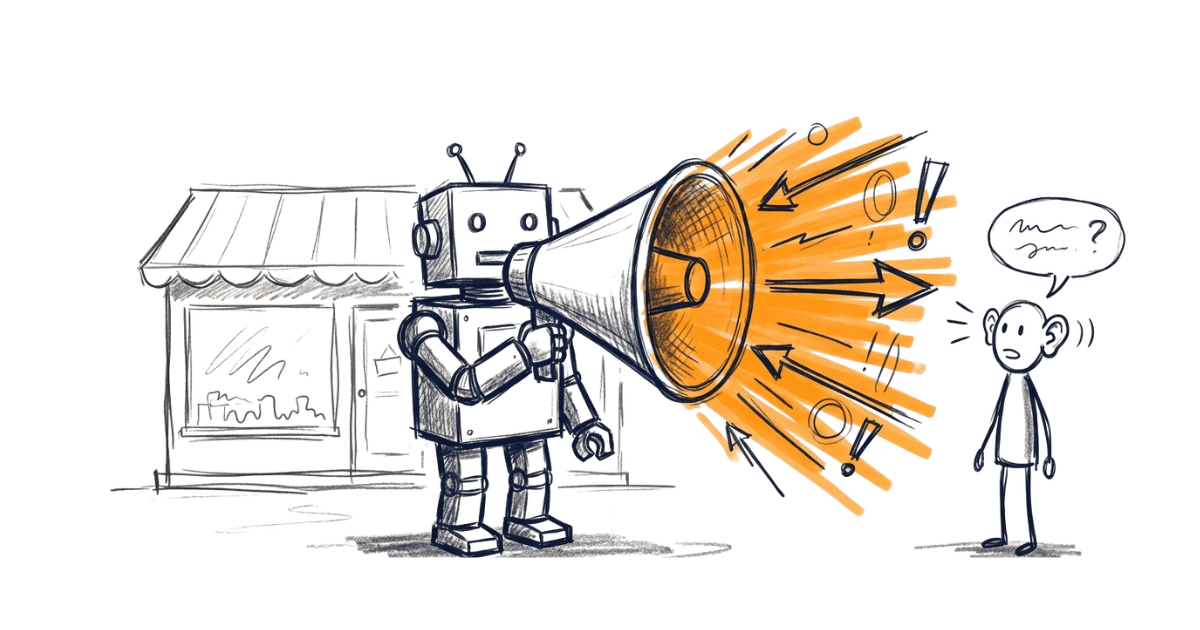
Your potential customer has a question.
Not about you specifically. Just a question about their problem.
“What accounting firms in Singapore work well for SMEs?”
“Which HR consultants should I consider?”
“What’s a good digital marketing agency for a growing brand?”
A few years ago, they’d search Google, click through a few websites, and form their own opinion.
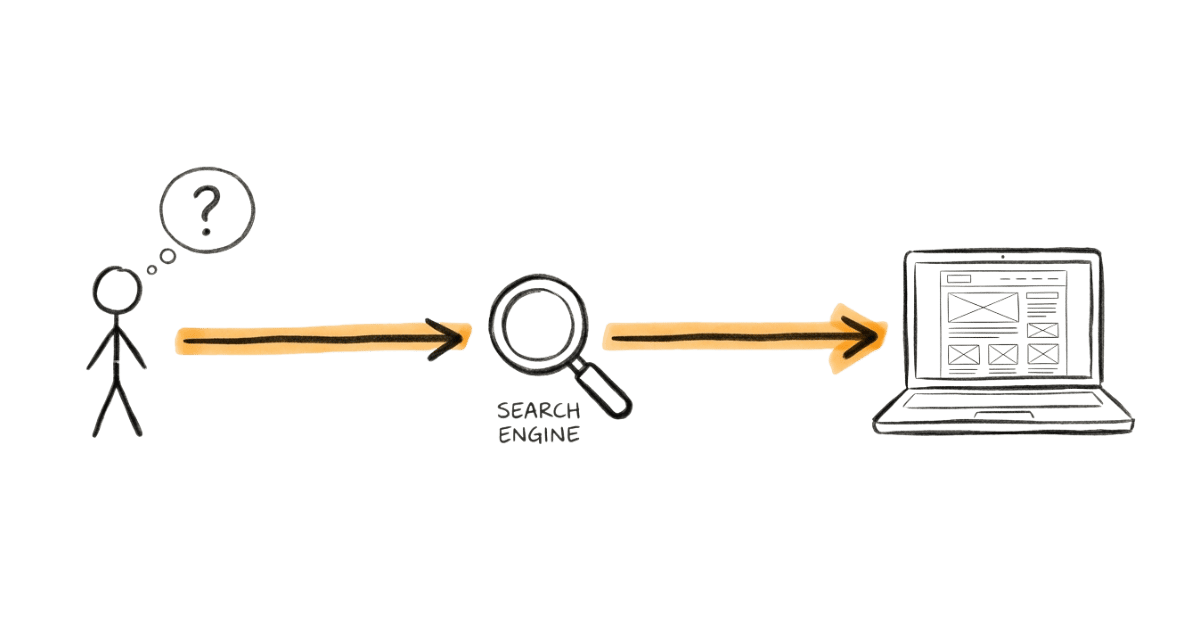
Today, many of them don’t do that.
They type the question into ChatGPT or Perplexity. They get an answer back in seconds. Names, descriptions, a rough comparison. And they use that to decide who’s worth looking into further.
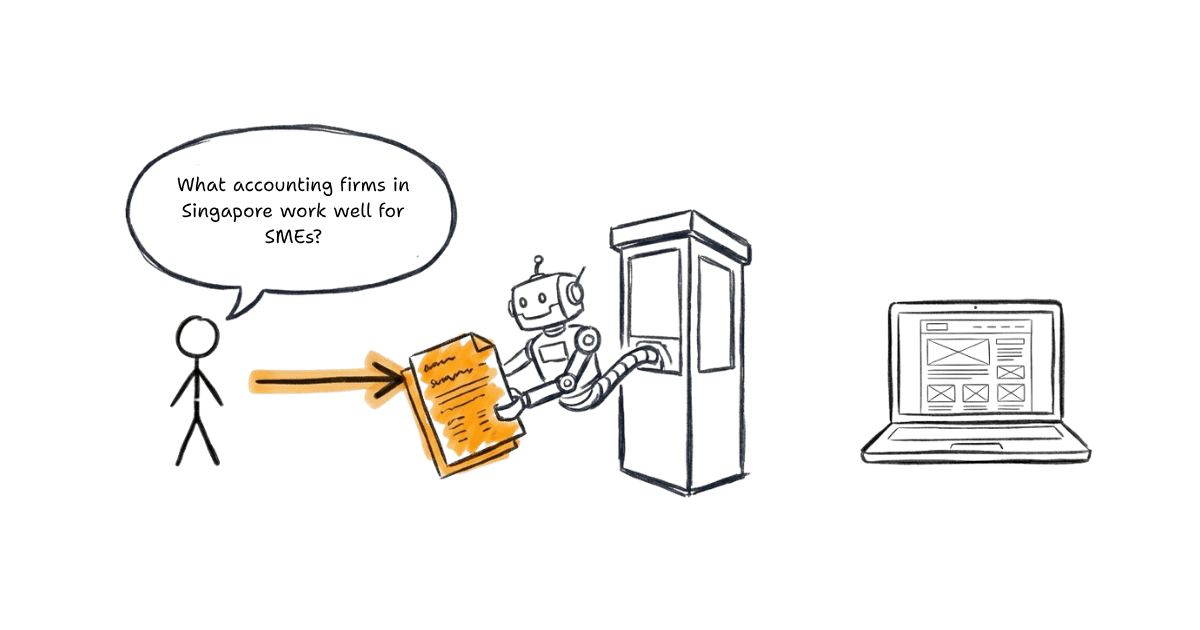
Research shows that people increasingly encounter an AI-generated explanation before they ever visit a website directly. Tools like Google’s AI Overviews work by synthesising information from multiple sources across the web, then presenting a summary as the first thing a searcher sees.
Which means the first explanation of your business may no longer come from you.
It may come from AI.
And AI built it from your website.
What AI actually said about two accounting firms
I ran a test recently using ChatGPT, with this prompt:
Tell me about [Company Name]. What do they do, who do they serve, and what makes them different?
I asked it about two Singapore accounting firms. Both serve SMEs. Both offer incorporation, accounting, tax, and compliance services. On the surface, they are similar businesses.
Here’s what came back.
For Grof, ChatGPT described them as
an outsourced finance department for SMEs. It explained their model as finance-as-a-service, bundling banking, accounting, and compliance into one platform. It mentioned their four pillars: compliance, cash flow, convenience, and control.
Specific. Differentiated. A founder reading that knows immediately whether it’s relevant to them.
For the second firm (a well-established traditional accounting company), ChatGPT described them as
a one-stop solution provider offering a broad range of back-office and compliance services to startups and SMEs.
Also accurate. But it could describe fifty firms in Singapore.
Same category. Same target market. Very different descriptions.
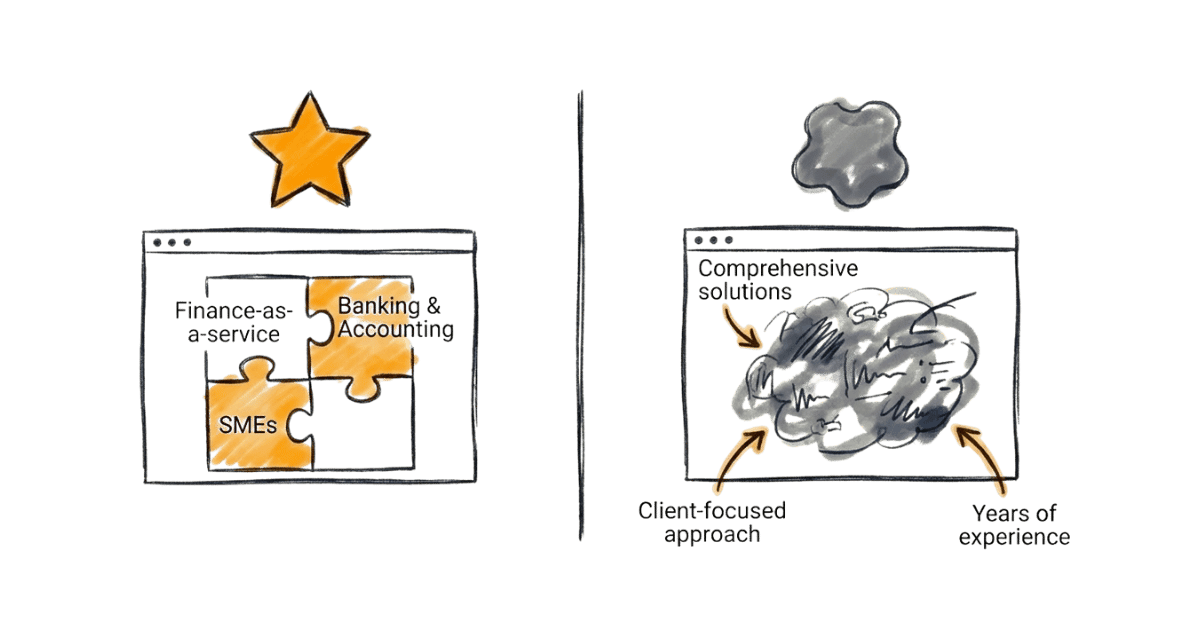
The difference wasn’t the quality of their work. It was the clarity of their website.
Grof gave ChatGPT something specific to say. The other firm didn’t.
When ChatGPT describes two businesses in the same industry, the one with clearer positioning almost always gets the clearer description.
How AI reads your website
AI tools don’t experience your website the way a human does.
They don’t notice your design. They don’t feel the mood of your photography. They don’t register that your navigation is clean.
They read your words and extract meaning.
Specifically, they try to answer three questions: What does this business do? Who do they serve? What makes them different?
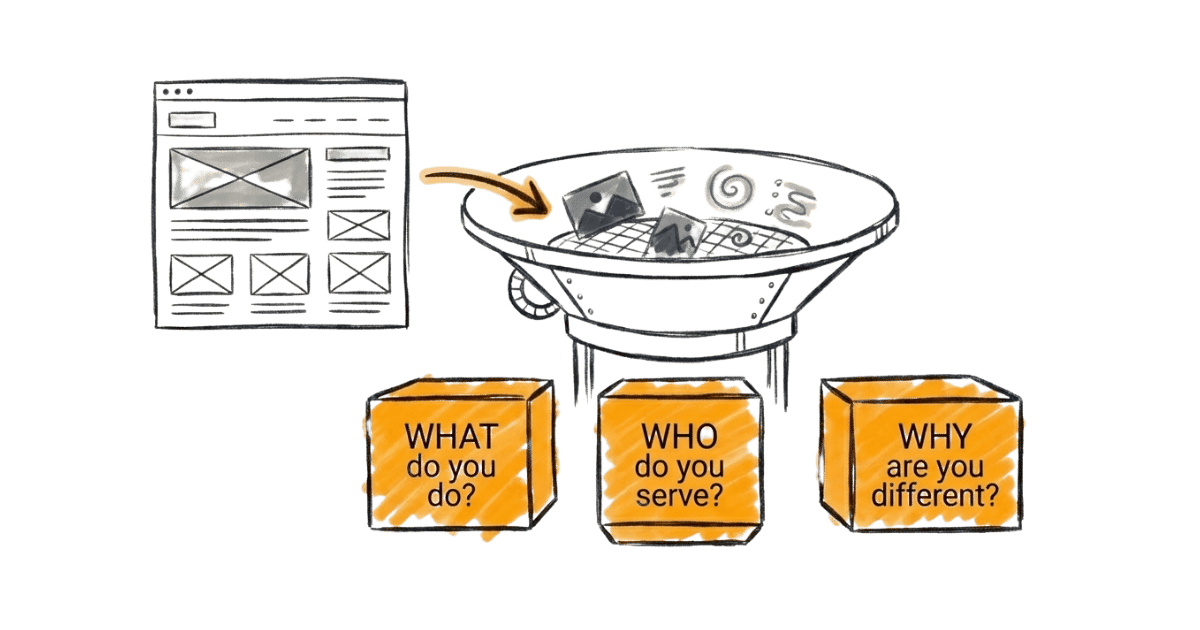
If your website answers those questions clearly, AI describes you clearly.
If your website is full of phrases like “comprehensive solutions,” “client-focused approach,” and “years of industry experience”, AI will describe you in exactly those terms.
Because that’s all it has to work with.
This isn’t just observation. Studies of generative search results show that content structure and page clarity significantly influence whether a page gets cited in AI-generated answers.
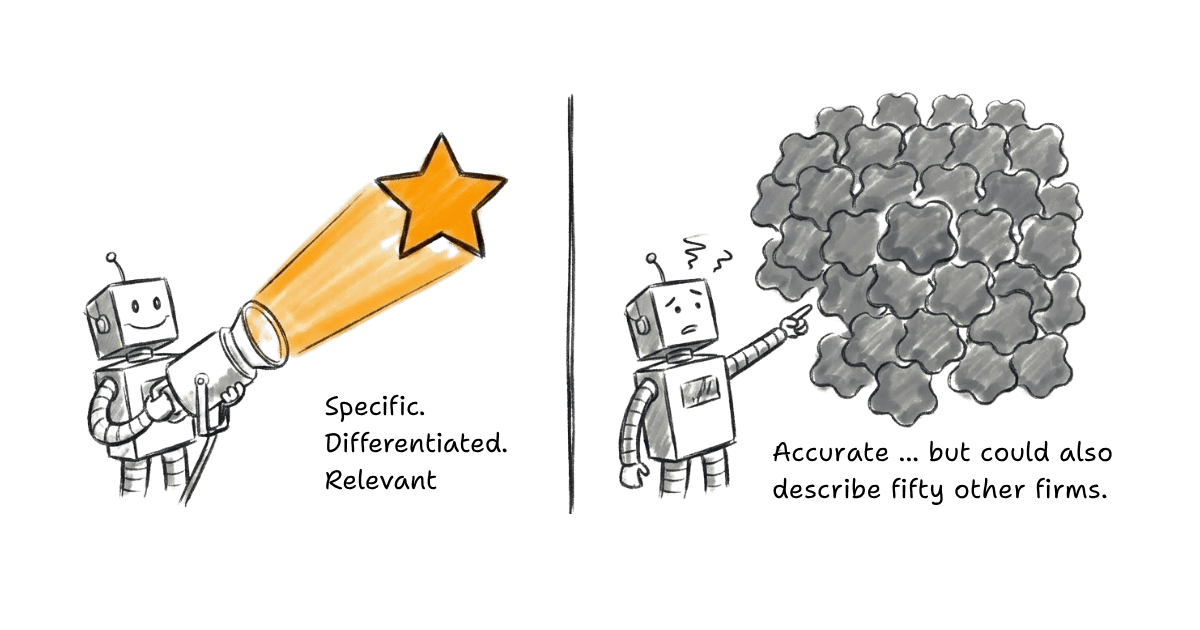
The clearer the signal, the more likely AI picks it up and repeats it.
Vague websites used to be a human problem. Now they’re an AI problem too.
When your website was vague, the damage was contained.
A visitor would land, feel uncertain, and bounce. You lost that lead.
Now the damage compounds.
A vague website doesn’t just confuse the human who visits. It trains AI to describe you in generic terms to every person who asks about your category, across every platform that reads your content.
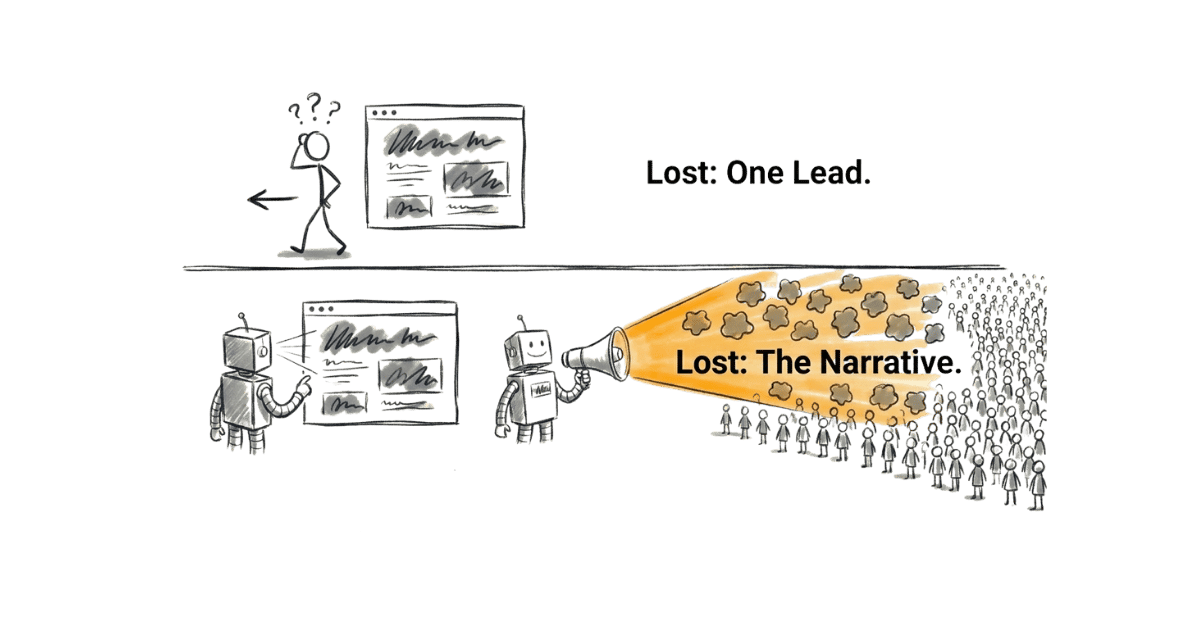
You’re not losing one visitor.
You’re losing the narrative.
Every time someone asks an AI tool about businesses in your space, and your positioning isn’t clear, AI either skips you, mentions you briefly, or folds you into the category noise.
“There are several providers in this space. Most offer similar services. Pricing varies.”
That’s what a vague website produces at scale.
GEO is not just a new checklist. It’s a clarity problem.
You may have come across the term GEO (generative engine optimisation). Or AEO (answer engine optimisation). Both refer to the same challenge: making sure AI tools can find you, understand you, and describe you accurately.
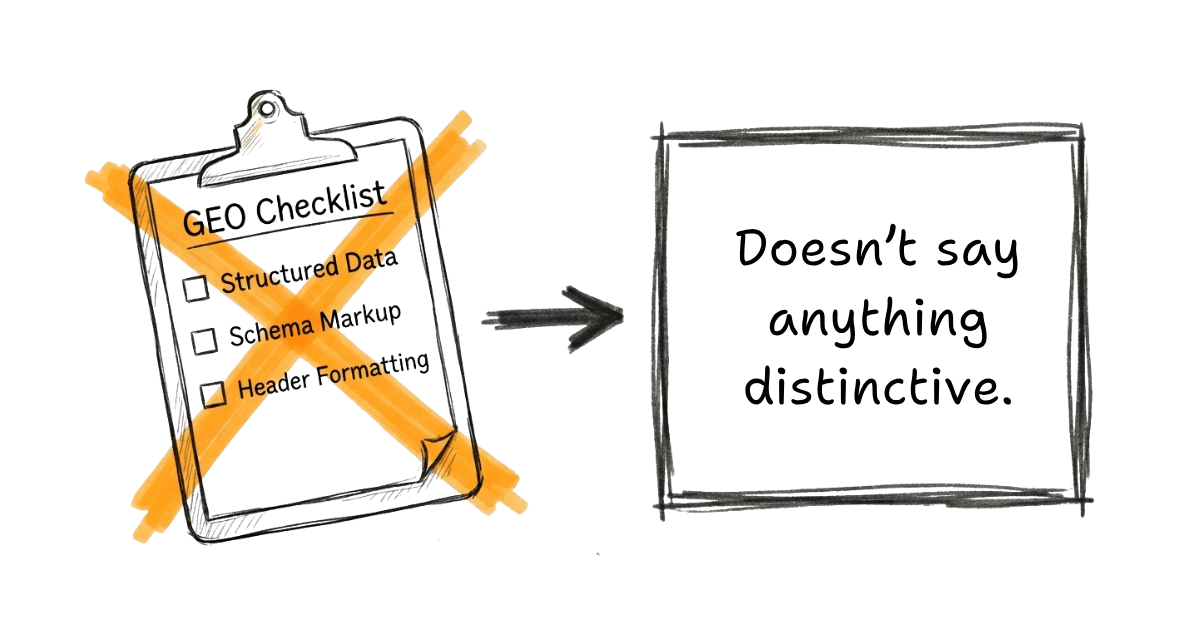
There’s a growing list of tactics around this. Structured data, schema markup, header formatting, FAQ sections.
Some of it is genuinely useful. Some is noise.
But most businesses chasing GEO are treating a symptom.
The root cause is simpler: their website doesn’t say anything distinctive.
You can add all the structured data you want. You can update your schema and optimise your headers. But if your homepage still says you offer “quality service tailored to your needs,” AI will read that and file you under generic.
AI doesn’t only read your website. It reads everything written about you: articles, directories, comparisons, mentions across the web. That’s partly why well-positioned businesses get richer descriptions. They’ve given other people something specific to say about them too.
But your website is usually where the clearest signal starts. Or doesn’t.
GEO tactics help AI find you.
Clarity determines what AI says about you once it does.
Test this yourself right now
Open ChatGPT or Perplexity and ask:
“What does [your business name] do? Who do they serve and what makes them different?”
Read the answer carefully.
If it sounds like a description of your industry rather than your business specifically, that’s your diagnosis.
Most business owners who run this test don’t like what they find.
Not because their business is weak. Because their website never gave AI anything specific to say.
Your SEO provider is probably not the right person to fix this
If you’re already working with an SEO provider, you’ve likely brought up GEO by now.
The conversation probably went something like this.
You asked what GEO means for your business. They explained it’s about getting cited by ChatGPT, Claude, Gemini. They said they’re working on it. The conversation moved on.
That’s not a criticism of SEO providers. Getting you ranked and cited is real work, and it matters.
But there’s a question they’re not asking.
When AI cites you, or when a visitor lands on your page from search, what happens next?
If your website can’t clearly communicate who you are, who you help, and why you’re different, the traffic leaks out. The citation leads nowhere. The visitor bounces or files you under “one of many options.”
That is why, if you are rebuilding the site, it matters to choose a web design company that understands positioning, not just one that can make the page look more modern.
SEO and GEO fill the barrel. They work hard to get water in.
But if the barrel has holes, it doesn’t matter how much water goes in.
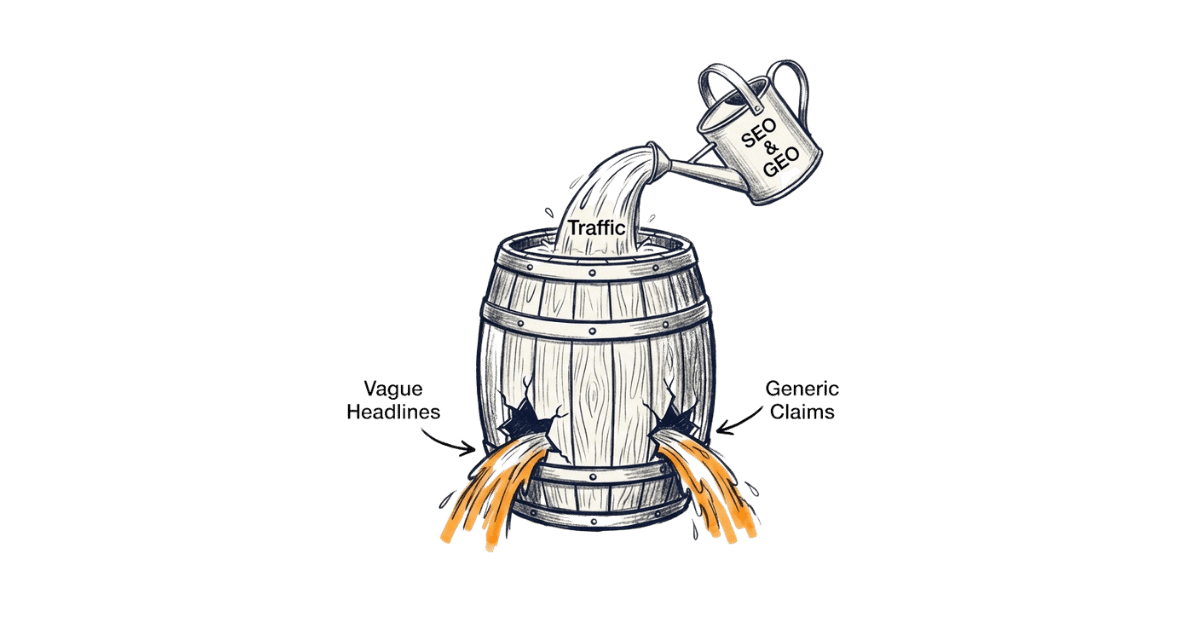
The holes are a positioning and clarity problem. They show up as vague headlines, generic service descriptions, and a homepage that sounds like everyone else in your category. No amount of schema markup or backlink building fixes that.
This is where SEO’s job ends and a different conversation begins.
The question isn’t just “how do I get more traffic?” It’s “when the right person lands on my page, does my website give them enough reason to believe I’m the right choice?”
If the answer is no, or if you’re not sure, that’s worth sorting out before you put more budget into bringing people in.
Your website now has two audiences
Your website has always had one job: help the right visitor decide to reach out.
That job hasn’t changed.
But there’s a second audience now.
AI tools are reading your site too. Summarising it. Deciding whether to mention you, and how, to people who may never visit directly.
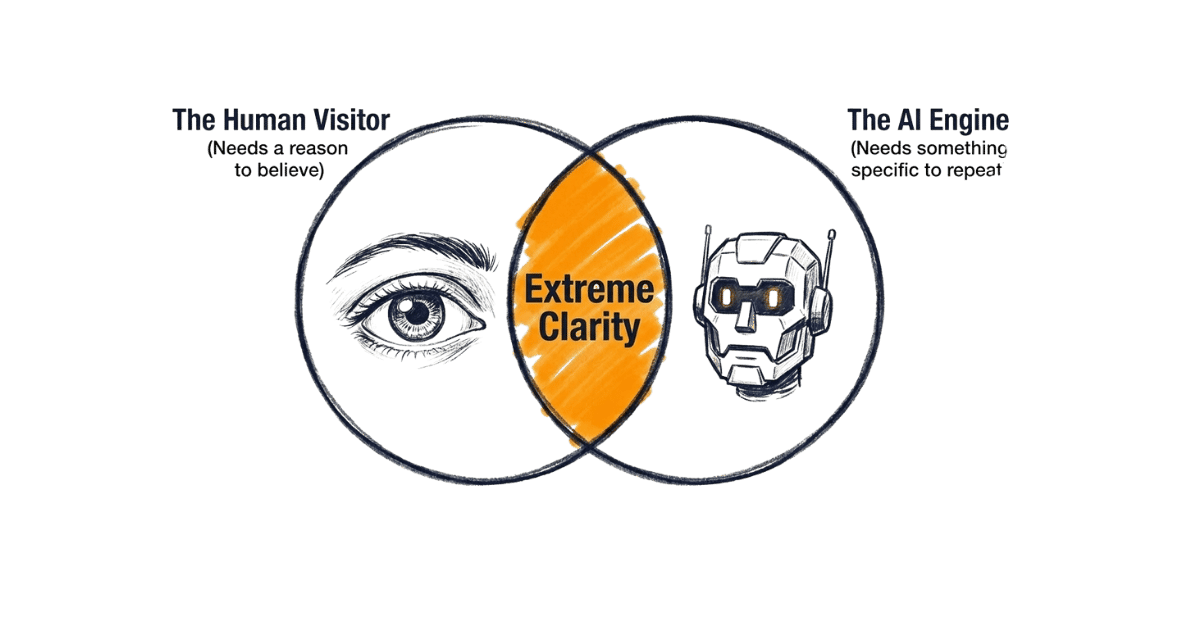
The businesses that do well in this environment aren’t the ones adding the most GEO tags.
They’re the ones that are clearest about who they are, who they help, and why it matters.
That clarity does two things at once.
It helps the human visitor decide.
And it gives AI something worth repeating.
Not sure what AI currently says about your business? Ask it. The answer will tell you more about your website than most audits will.
Frequently Asked Questions
How does AI decide what to say about a business?
AI tools pull from everything publicly available about a business, including its website, blog posts, third-party mentions, directories, and comparisons written elsewhere. From all of that, they try to extract three things: what the business does, who it serves, and what makes it different. If that information is clear and specific, AI can reproduce it accurately. If the content is vague or generic, AI fills the gaps with category-level language that could apply to any competitor.
Why do AI tools describe some businesses better than others?
Two reasons. First, well-positioned businesses use specific language on their own websites, with clear positioning, named frameworks, and defined customer problems. That gives AI something concrete to extract. Second, they tend to be cited and discussed across multiple external sources, which gives AI more material to work with. Businesses that sound generic on their own site, and rarely get mentioned elsewhere, end up with generic AI descriptions.
What is generative engine optimisation (GEO)?
GEO refers to the practice of optimising your content so that AI tools like ChatGPT, Perplexity, and Google’s AI overviews can find, understand, and accurately represent your business in their responses. It overlaps with traditional SEO in some areas, but the goal is different. SEO is about ranking in search results. GEO is about being cited, summarised, and recommended by AI when someone asks a relevant question.
How does my website affect what AI says about my business?
Your website is usually the primary source AI uses to understand your business. If your homepage is clear about who you help, what problem you solve, and why you’re different, AI can reflect that back accurately. If it relies on vague claims and generic service descriptions, that’s what AI will reproduce, and that’s what potential customers will hear about you before they ever visit your site directly.

About the author
Thiam Hock is the founder of Hockworks. He helps service businesses write and structure their websites so AI tools can accurately summarise them: clear positioning, specific proof, and language that makes the right customer say, "this is for me." His work focuses on clarity and differentiation, not design trends.
Read more about Thiam Hock →